18 September 2025
Planning reforms welcomed, but infrastructure and local input still key
The peak body for local government in NSW has broadly welcomed changes to the state’s environmental planning legislation, announced yesterday by the Minns Government.
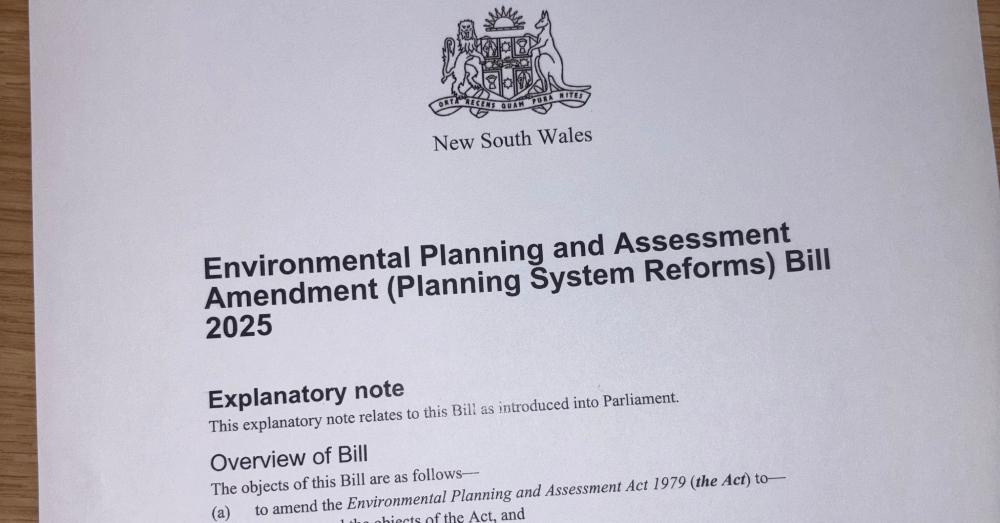
The Environmental Planning and Assessment Amendment (Planning System Reforms) Bill 2025 includes changes that will affect local development assessment and complying development processes, community participation and regional and local planning panels, as well as improving the government’s own approach to its development functions.
Local Government NSW (LGNSW) President Mayor Phyllis Miller OAM commended the NSW Government on its bipartisan approach to simplifying and streamlining the planning processes.
Mayor Miller said while the sector would be working through the detail of the legislation and providing further feedback, it was clear the proposed changes would address several key concerns long held by councils across the state.
“LGNSW supports genuine and sensible efforts to streamline planning regulation and contribute to increasing housing supply and diversity. We want to work with the government to ensure councils are supported to fulfill their assessment and broader planning responsibilities,” Mayor Miller said.
“Councils have been actively reviewing and improving their assessment processes with promising results, an outcome that Minister Scully recently acknowledged at a Budget Estimate hearing. But the local government sector has long held frustrations waiting for state agencies to provide advice on development applications and planning proposals, which in turn has a knock-on effect to their timeframes,” Mayor Miller said.
“It’s therefore pleasing to see the introduction of the Development Control Authority (DCA), which will effectively act as a clearing house for NSW government concurrences. Previously, this clunky and inconsistent process frustrated both councils and the development sector alike and led to significant delays delivering planning and housing outcomes across the state”.
“We look forward to the government releasing the details of how the DCA will function, how it will report transparently on its performance, and ultimately how it will contribute to housing delivery in NSW,” Mayor Miller said.
“Other sensible changes promise to reduce the time and ratepayer money that councils will spend defending their planning decisions in the Land and Environment Court. We also commend the government on the inclusion of a new climate resilience object in the legislation. This is an acknowledgement of the critical need for the planning system to deliver development that responds to climate change and promote resilience to natural disasters – something that councils across the State have been doing and saying for decades” Mayor Miller said.
On a less welcome note, the Bill also proposes to enshrine the Housing Delivery Authority (the HDA) as a permanent fixture in the NSW planning system. The introduction of the HDA in November 2024 was condemned at the time by the local government sector who saw it as an attempt to circumvent councils in local decision making.
“While we acknowledge that since that time, we have received more information and data around the processes and performance of the HDA, it remains a concern for many councils feeling the impact and we will continue to provide feedback to the government.”
“The central concern is that major development proposals and ad hoc rezonings submitted to the HDA have no clear links to adopted plans and strategies that local communities have developed with their council,” said Mayor Miller. “We urge the government and the HDA to continue to work more collaboratively with councils on all its State-led processes to ensure that growth and development is balanced and supported with the necessary infrastructure and if this bill passes we will be calling on the government to review the role of the HDA at the end of the Housing Accord period,” Mayor Miller said.
“And infrastructure remains the key – we need the State Government, and the Federal Government to step up on the direct funding and delivery of key infrastructure. There is simply no point in approving and building thousands and thousands of new homes if we don’t have the schools, the hospitals, the roads, the sports fields, community facilities and the sewerage and water infrastructure to support them.”
Mayor Miller says infrastructure delivery and the importance of completion are the two key areas that LGNSW will continue to advocate on. “We need the State to drive the development industry to actually deliver on approvals. Councils have an important role to play in the assessment and approval processes for new housing but we have zero control over whether those houses are ever actually built” she said. “That’s something that the development sector needs to improve on.”
Mayor Miller provided further comments on other key changes the legislation seeks to bring about. ”Councils welcome the return of greater emphasis on local planning panels. with the removal of the Sydney District and regional planning panels and we look forward to more local voices being part of the planning process” said Mayor Miller.
“Equally, we acknowledge the standardisation of one statewide community consultation plan, but we call on the government to leave enough room for local conditions such as the lack of reliable internet and mobile coverage. It’s critical that a standardised plan is used to provide greater access to planning information rather than cut timeframes or reduce consultation opportunities generally.”
The proposed changes have been described as the most significant reform of NSW Planning Legislation in nearly 50 years. Mayor Miller said that given the magnitude of these wide-ranging changes, there needed to be robust, transparent and regular monitoring by the NSW Government of the outcomes of these reforms.
“Councils want assurances that local government will be involved in fine-tuning the legislation and its implementation so that they complement the genuine efforts of councils to improve their processes”, she said. “At the end of the day, local government is best placed to ensure that local communities still have an input into local decision making."
BACK TO ALL NEWS